
ISO Certification for Manufacturing Industry
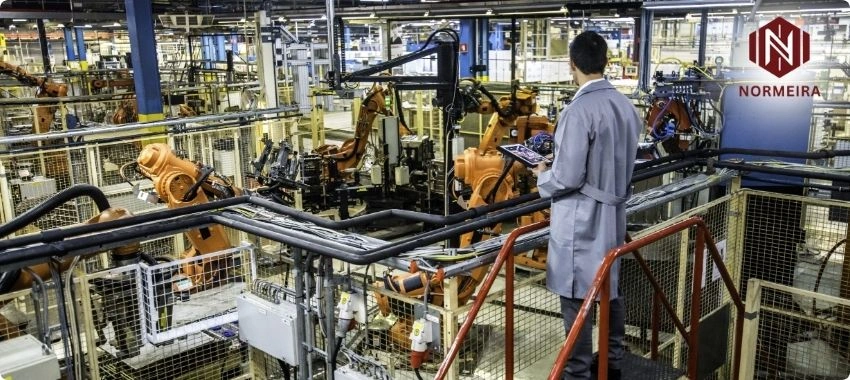
How ISO Certification Benefits the Manufacturing Sector?
ISO Certification is essential for the manufacturing industry as it ensures that products, processes, and systems comply with internationally recognized standards. It helps organizations improve efficiency, maintain consistent quality, and meet customer expectations effectively.
IStandards like ISO 9001 (Quality Management System) enable manufacturers to streamline operations, reduce errors, and enhance product reliability. By implementing ISO standards through NORMEIRA, businesses can:
- Improve operational performance
- Deliver consistent product quality
- Increase customer satisfaction
- Strengthen global credibility
- Ensure compliance with regulatory requirements
ISO certification also opens new business opportunities by demonstrating a commitment to quality and continuous improvement.
Importance of ISO Certification for Manufacturing Companies
In today's competitive market, manufacturing companies must maintain high standards of quality, safety, and efficiency to stay ahead. ISO Certification provides a structured framework that helps organizations achieve these goals while improving overall performance.
With ISO certification, manufacturers can:
- Enhance process efficiency and reduce waste
- Improve product consistency and reliability
- Build trust with clients and stakeholders
- Meet industry regulations and standards
- Gain a competitive advantage in global markets
We support manufacturing companies in implementing ISO standards effectively, ensuring long-term business growth and operational excellence.
Most Important ISO Certifications for Manufacturing Industry
- ISO 9001- Ensures consistent product quality and improved customer satisfaction.
- ISO 14001- Helps reduce environmental impact and promotes sustainability.
- ISO 45001- Improves workplace safety and reduces risks.
- ISO 50001- Enhances energy efficiency and reduces operational costs.
What is Precision Manufacturing?
Precision manufacturing refers to the production of highly accurate and complex components using advanced technologies. It is commonly used in industries where precision is critical, such as aerospace, medical devices, and electronics.
What is Quality in Manufacturing?
Quality in manufacturing is the ability of a product or process to meet defined standards and customer expectations. It includes aspects such as:
- Performance
- Durability
- Reliability
- Compliance with specifications
Maintaining quality ensures customer satisfaction and long-term success.
- ISO 9001 Certification
- ISO 14001 Certification
- ISO 45001 Certification
- HACCP Certification
- ISO 22000 Certification
- ISO 22716 Certification
- Halal Certification
- ISO 27001 Certification
- ISO 22301 Certification
- ISO 41001 Certification
- ISO 50001 Certification
- ISO 10002 Certification
- ISO 10004 Certification
- ISO 26000 Certification
- ISO 31000 Certification
- ISO 20400 Certification